
Standardized Photography and Informed Consent Before Plastic Surgery: Why Transparency Matters
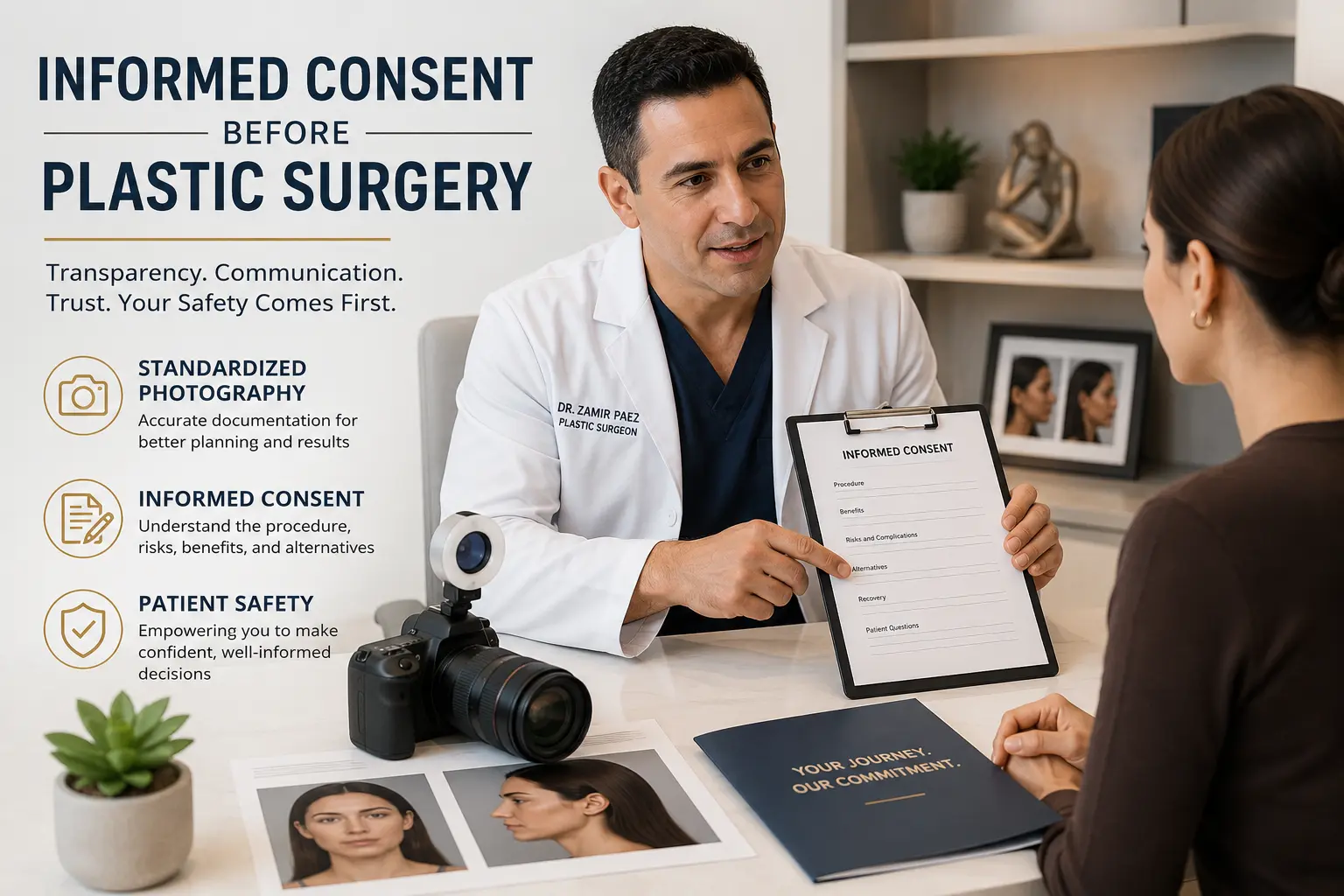
Planning cosmetic surgery is about much more than choosing a procedure. It is also about understanding what to expect, how the surgery will be performed, and how your surgeon will document your care.
Two essential parts of this process are standardized photography, plastic surgery and informed consent before plastic surgery. Together, they create a foundation of trust, improve communication, and help patients make well-informed decisions.
If you’re considering surgery with Dr. Zamir Paez in Colombia, these steps can definitely help you. Transparency during the plastic surgery consultation process makes all the difference: you understand your options, know what to expect from recovery, and can make a decision that feels right for you.
Why are Standardized Photography and Informed Consent so Important?
Plastic surgery is highly individualized. Every person’s anatomy, skin quality, healing ability, and cosmetic goals are different. This is why careful documentation and in-depth discussions are such an important part of the process before any treatment is recommended.
Using standardized photography plastic surgery alongside informed consent plastic surgery helps ensure that patients:
- Understand the proposed procedure
- Know the expected benefits and limitations
- Recognize possible risks and complications
- Have realistic expectations
- Participate actively in treatment decisions
Cosmetic surgery informed consent should never feel like just a box to tick. It is an ongoing conversation that carries through the entire consultation process.
What is Standardized Photography in Plastic Surgery?
Medical photographs taken under controlled conditions, with consistent lighting, camera angles, distance, and patient positioning, are what is meant by standardized photography.
Where a casual smartphone photo captures a moment, these images are designed to do something more precise, accurately documenting anatomy before and after surgery.
Why consistent medical photos matter?
An objective record of how you look before surgery is exactly what standardised photographs are designed to provide.
They help surgeons:
- Evaluate facial or body proportions
- Identify subtle asymmetries
- Measure anatomical landmarks
- Compare surgical outcomes accurately
Patients also benefit because these images provide a realistic reference throughout treatment rather than relying on memory alone.
This is one reason before and after plastic surgery photos taken professionally are much more reliable than photographs captured under different lighting or camera angles.
How standardized photos help surgical planning?
Accurate photographs become part of surgical planning.
During your consultation, surgeons may use these images to:
- Analyze facial balance
- Assess skin quality
- Evaluate previous scars
- Plan incision placement
- Discuss expected improvements
Standardized images shift the focus away from perfection and toward something more important and meaningful, realistic treatment goals that are shaped around your individual anatomy.
This approach supports greater plastic surgery transparency because every recommendation is based on objective clinical findings.
Monitoring healing and long-term results
Post-surgery photography is just as important. Follow-up images give surgeons the ability to monitor:
Stage | Purpose of medical photography |
Before surgery | Baseline assessment and planning |
Early recovery | Monitor swelling and healing |
Several months later | Evaluate surgical progress |
Final follow-up | Document long-term outcome |
Healing continues for months after many cosmetic procedures. Comparing standardized images over time provides a far more accurate picture of progress than day-to-day observations.
What is Informed Consent Before Plastic Surgery?
Informed consent before plastic surgery is the process of making sure patients understand every important aspect of their planned procedure before agreeing to surgery.
It’s not just about signing on the dotted line of a consent form, there’s a lot more involved than that.
Instead, it includes detailed discussions about:
- Diagnosis
- Surgical technique
- Expected results
- Recovery timeline
- Potential complications
- Alternative treatments
- Questions from the patient
This process respects patient autonomy and supports safe decision-making.
Understanding benefits and risks
Every cosmetic procedure has benefits as well as risks.
Potential benefits may include:
| Possible risks vary depending on the procedure but may include:
|
A thorough discussion helps patients understand both possibilities before surgery.
Setting Realistic Expectations
One of the most valuable parts of informed consent before plastic surgery is discussing realistic expectations.
Even highly experienced surgeons cannot guarantee identical results to photographs found online or on social media. Understanding how recovery affects facial movement, including temporary changes in your smile or voice after rhinoplasty, can also help patients develop realistic expectations.
Instead, surgeons explain:
- What surgery can realistically achieve
- Expected limitations
- Individual healing differences
- Factors that may influence final results
There is real value in this kind of honest and clear communication; it builds trust, puts patients at ease, and helps prevent misunderstandings from arising after surgery.
Reviewing Recovery and Possible Complications
As much thought and attention goes into a successful surgery, recovery deserves exactly the same.
Patients should understand:
- Expected swelling
- Bruising
- Activity restrictions
- Follow-up appointments
- Warning signs requiring medical attention
- Time needed before final results become visible
When recovery is discussed in advance, patients are better equipped to prepare themselves physically, emotionally, and financially for what lies ahead.
How Standardized Photography and Informed Consent Work Together?
These two processes complement each other throughout the plastic surgery consultation process. The two work hand in hand; standardised photographs provide the visual information, and informed consent provides mutual medical understanding that completes the picture.
Together they help:
- Improve communication
- Reduce confusion
- Document treatment planning
- Track surgical progress
- Support plastic surgery patient safety
- Promote informed decision-making
Dr. Zamir Paez combines both approaches to make sure every patient begins surgery with a genuinely clear understanding of what has been planned for them.
Why are these Steps Especially Important for International Patients?
Many patients travel for plastic surgery Colombia, attracted by experienced surgeons and internationally recognized cosmetic care.
However, an international plastic surgery consultation often begins with a virtual plastic surgery consultation, allowing patients to discuss their goals and treatment options before travelling to Colombia.
Important considerations include:
- Virtual consultations using standardized photographs
- Review of medical history
- Discussion of travel timing
- Recovery accommodations
- Follow-up planning after returning home
- Clear explanation of consent documents
Open communication becomes especially important when patients travel internationally for treatment.
Questions Patients Should Ask Before Signing a Consent Form
Before agreeing to surgery, consider asking:
- What are the realistic results for my anatomy?
- What complications are most common with this procedure?
- How long is recovery likely to take?
- Will additional procedures improve my outcome?
- How are before and after plastic surgery photos used during planning?
- What happens if revision surgery becomes necessary?
- What follow-up care is available after I return home?
Patients should never feel rushed during this discussion.
How Experienced Plastic Surgeons ensure Transparency Throughout The Patient Journey?
The first consultation is where transparency begins, and it does not stop there, continuing all the way through treatment.
Experienced surgeons typically:
- Review your complete medical history
- Perform a detailed physical examination
- Use standardized photography
- Explain risks honestly
- Discuss alternative treatment options
- Encourage questions
- Provide written postoperative instructions
This level of plastic surgery transparency is what sets the right tone, patients feel informed, respected, and in control of their decisions rather than feeling any kind of pressure.
Choosing a Plastic Surgery Clinic That Prioritizes Patient Safety & Trust
Choosing the right and experienced surgeon involves more than just comparing prices.
Look for clinics that emphasize:
- Board-certified expertise
- Comprehensive consultations
- Thorough cosmetic surgery informed consent
- Clear communication
- Evidence-based surgical planning
- Ethical use of clinical photography
- Long-term patient follow-up
When patients understand every step of the process, they are better prepared for surgery and recovery.
For individuals considering treatment with Dr. Zamir Paez, these principles support a safer, more transparent surgical experience built on education and trust.
A Safe Plastic Surgery Experience Starts with Knowledge
When it comes to safe, personalized care, informed consent before plastic surgery and standardized medical photography go hand in hand, both providing the clarity that good outcomes depend on.
The combination of both improves communication, enables more precise surgical planning, encourages realistic expectations, and makes a real contribution to plastic surgery patient safety throughout the entire treatment journey.
Whether you are seeking care locally or travelling for plastic surgery in Colombia. Many international patients also compare rhinoplasty cost in Colombia vs USA before choosing where to have surgery. Choosing a surgeon like Dr. Zamir Paez, who values transparency, education, and careful documentation, allows you to make confident, informed decisions about your care.

FAQs- Frequently Asked Questions
Informed consent before plastic surgery is the process of understanding your procedure, its benefits, risks, and recovery before agreeing to treatment.
They provide an accurate visual record that helps your surgeon plan your procedure and track your healing and final results.
Yes. They help your surgeon assess your anatomy, discuss realistic outcomes, and create a personalized surgical plan.
It should explain the procedure, expected benefits, possible risks, recovery, and alternative treatment options in clear, understandable language.
For international patients, especially, knowing exactly what to expect from surgery and recovery before travelling makes the whole treatment journey feel a lot more informed and a whole lot less stressful.
Yes. Your surgeon should encourage you to ask questions so you feel fully informed and comfortable before making your decision.
They prioritize thorough consultations, detailed planning, informed consent, and ongoing care to support safe, high-quality treatment.
Dr. Zamir Páez
About the Author
Dr. Zamir Páez
Board-Certified Plastic, Reconstructive & Aesthetic Surgeon
- Internationally Certified Plastic Surgeon
- Specialist in Advanced Body Contouring & Facial Aesthetics
- Practicing in Colombia & Dubai
- Co-Founder of BodyCraft Academy
Dr. Zamir Páez is an internationally recognized plastic, reconstructive, and aesthetic surgeon known for delivering natural-looking results through advanced surgical techniques and personalized patient care. With over a decade of experience, he specializes in body contouring, mommy makeover procedures, breast surgery, rhinoplasty, facial rejuvenation, and HD liposculpture for patients across the Middle East and internationally.
Internationally trained at renowned institutions including The Royal Melbourne Hospital in Australia, Dr. Zamir combines surgical precision, innovation, and artistic balance to create refined aesthetic outcomes tailored to each patient. He is also the co-founder of BodyCraft Academy, where he contributes to the global education and training of plastic surgeons.
Medical Disclaimer
This article is intended for informational and educational purposes only and should not be considered medical advice, diagnosis, or treatment. Always consult a qualified healthcare professional regarding any medical or aesthetic concerns before undergoing any procedure.
Medically reviewed by Dr. Zamir Páez, Board-Certified Plastic, Reconstructive & Aesthetic Surgeon.
