What Type of Breast Lift Leaves the Least Visible Scars?
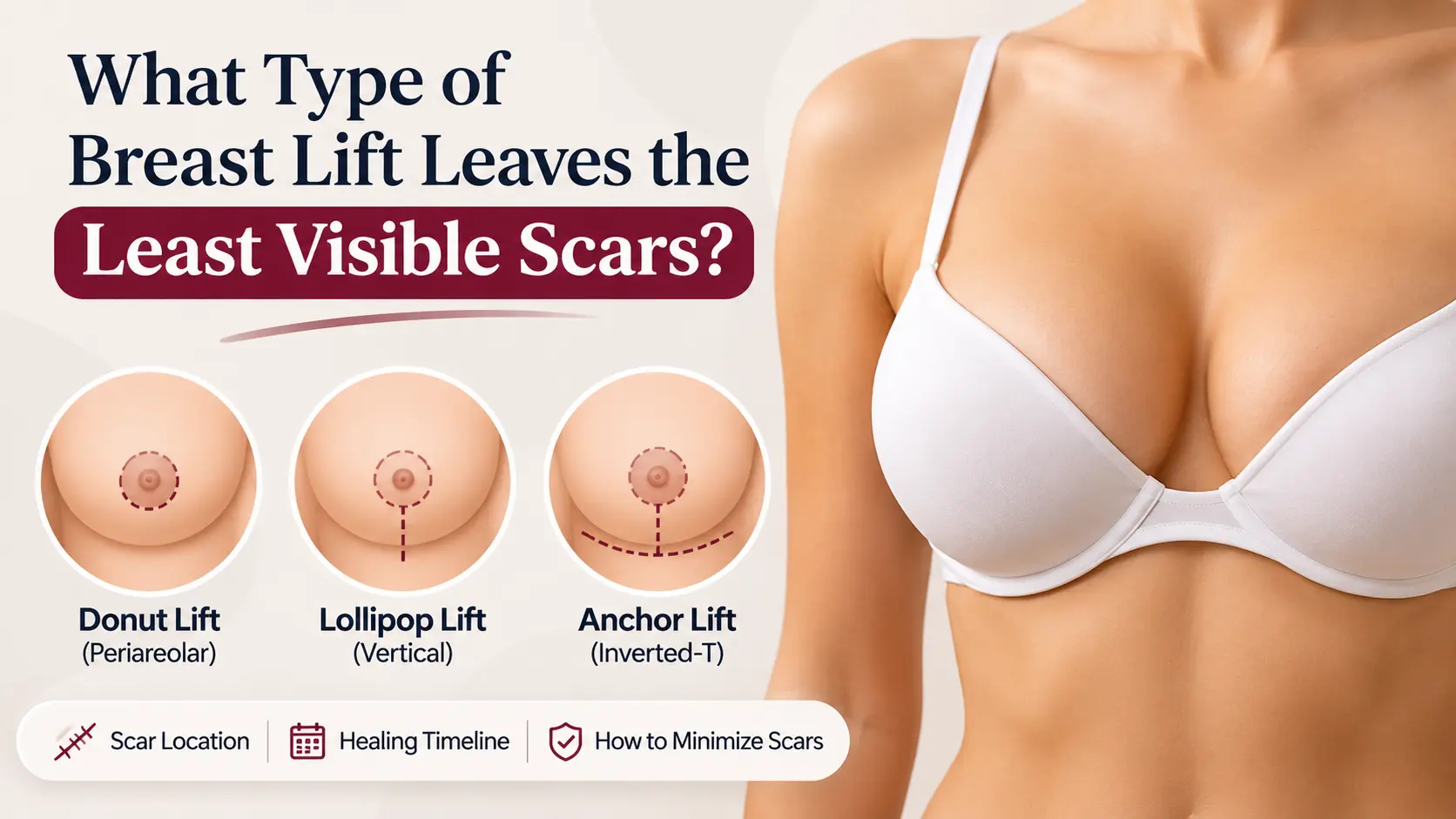
Scars are the most common worry before breast lift surgery, and the question is fair. Every technique trades scar length against how much lift it can deliver. This guide covers how each technique scars, how scars heal, and how to choose with confidence.
Why Do Breast Lift Procedures Leave Scars?
A breast lift (mastopexy) removes excess skin and reshapes breast tissue so the breast sits higher and firmer. Surgeons can only do that through incisions, and any cut through the full thickness of the skin heals with a scar. That is how the body repairs itself.
The aim is to keep breast lift surgery scars as short as possible and place them where clothing, bras and natural folds hide them. Incision length depends on how much skin must be removed. Mild sagging needs a small incision, and significant sagging needs more.
Scars begin as red or pink lines and mature over 12 to 18 months. Early appearance is not final appearance.
Which Breast Lift Technique Leaves the Least Visible Scars?
The least visible scar belongs to the technique that is matched to your degree of sagging. A shorter scar is only a good result if it delivers the lift you need. Using a technique that is too small for your anatomy can leave you with poor shape and a scar that stretches.
At Dr. Zamir Paez’s practice, the technique is chosen after an in-person assessment of your skin quality, nipple position, and breast volume.
Donut Breast Lift (Periareolar Technique)
The donut lift uses a circular incision around the areola, where the darker pigment helps camouflage the scar. It leaves no vertical or crease scars.
A breast lift donut scar is generally the least noticeable because it sits on the areolar border. However, it suits only mild sagging, where the nipple sits only slightly low. It can modestly raise the nipple and tighten the skin, but it cannot lift a significantly drooped breast.
Possible drawbacks include scar widening or a slightly flattened breast shape if the technique is stretched beyond its limits.
Lollipop Breast Lift
The lollipop (vertical) lift adds a vertical incision from the areola down to the breast crease. It leaves a scar shaped like a lollipop, with no scar along the crease.
A lollipop breast lift scar is longer than a donut scar but is generally well tolerated, because the scar sits on the lower breast and is usually hidden by bras and swimwear. It suits moderate sagging and allows more reshaping and lift than the donut technique.
Anchor Breast Lift
The anchor (inverted-T) lift uses three incisions: around the areola, vertically down, and along the breast crease. It leaves the most scarring but gives the most control, so it is the right choice for significant sagging, excess skin, or a major change in breast shape after weight loss or pregnancy.
The crease scar sits in the natural fold, so the final scar is often better hidden than patients expect.
Breast Lift Scars — Comparing the Three Techniques
Type | Donut | Lollipop | Anchor |
Incisions | Around areola | Areola + vertical line | Areola + vertical + crease |
Scar length | Shortest | Moderate | Longest |
Best for | Mild sagging | Moderate sagging | Significant sagging |
Lift power | Limited | Good | Maximum |
Visibility | Lowest | Low to moderate | Moderate, hidden in crease |
Breast reduction and lift scars follow the same patterns. Many reductions use the lollipop or anchor pattern, since removing volume also removes skin. If you are considering a lift with volume reduction, expect scars similar to the lollipop or anchor lift.
What Do Breast Lift Scars Look Like After Surgery?
Scars after a breast lift follow a typical timeline:
- Weeks 1 to 6: Incisions are closed and covered with dressings. Scars appear pink or red and may feel slightly raised.
- Months 2 to 6: Scars may look darker, firmer, or more prominent as the tissue remodels. This phase worries many patients but is normal.
- Months 6 to 12: Redness fades, and the scar softens and flattens.
- 12 to 18 months: Scars reach maturity, usually becoming thin, pale lines.
Scars never disappear completely, but most fade to fine, light lines that are easy to cover.
What Factors Affect Breast Lift Scar Visibility?
Technique is only one factor. Others include:
- Genetics and skin type: Some people scar more than others. Darker skin tones have a higher tendency toward pigmentation changes and raised scars.
- Skin elasticity: Thin or stretched skin may be more prone to wider scars.
- Incision tension: Excess tension when closing an incision can cause the scar to widen. Surgical technique plays an important role.
- Smoking: Nicotine restricts blood flow, which can delay healing and increase the risk of complications.
- Sun exposure: UV exposure can cause healing scars to become darker.
- Aftercare: Following post-operative care instructions helps support proper healing.
- Surgeon’s expertise: Precise incision placement and careful, layered closure can help minimize scarring. Dr. Zamir holds dual certification and performs surgery at Interquirófanos Clinic in Medellín, a facility accredited by Joint Commission International (JCI).
How Can You Help Breast Lift Scars Heal Well?
If you are wondering how to get rid of breast lift scars, prevention is the starting point. These habits support good healing:
- Follow your surgeon’s instructions. Wear the recommended support bra and avoid strenuous activity until cleared.
- Do not smoke. Stop before and after surgery, as advised.
- Protect scars from the sun. Cover them or use SPF 50 sunscreen once the incisions have healed.
- Use silicone sheets or gel. These are widely used to hydrate scars and help flatten them, once your surgeon confirms the incisions are fully closed.
- Massage gently when cleared. This can soften scar tissue.
- Eat well and stay hydrated. Protein- and vitamin-rich foods support tissue repair.
- Attend every follow-up. Early problems are easier to treat.
Can Breast Lift Scars Be Reduced or Revised?
Yes. If a scar heals poorly, options exist, and your surgeon will recommend them based on the scar type and how mature it is.
Non-surgical options include silicone products, laser treatments to improve colour and texture, microneedling, and corticosteroid injections for raised scars.
Breast lift keloid scars are uncommon but possible. A keloid grows beyond the original incision, while a hypertrophic scar stays within it but is thick. Both are more likely in people with a personal or family history. Tell your surgeon beforehand so a prevention plan can be made. Treatment may combine steroid injections, silicone therapy, laser, and, in selected cases, surgical revision.
Surgical revision can re-excise a wide or poorly healed scar and close it with less tension. It is usually considered only after the scar has matured, typically around a year after the original surgery.
How to Choose the Right Breast Lift Technique for Your Goals
Your consultation should give you a clear understanding of what the surgery can achieve. During the appointment, your surgeon should:
- Examine your nipple position, skin quality, and breast volume.
- Recommend a suitable technique based on your breast shape and degree of sagging.
- Share before-and-after photographs of patients with similar concerns.
- Explain where the scars will be and how they are likely to heal.
- Discuss whether breast implants or a reduction may be needed alongside the lift.
Be cautious of promises of a ‘scarless’ breast lift. Choosing a technique simply because it leaves smaller scars may compromise the final breast shape or lead to revision surgery.
Questions worth asking your surgeon:
- Which breast lift technique would you recommend for me?
- Where will the scars be placed?
- How do you manage scars after surgery?
- Are there any factors that could affect how my scars heal?
Conclusion
The donut lift leaves the least visible scar, the lollipop lift balances scar length with lift, and the anchor lift gives the most correction with the longest scar. The best choice is the technique that fits your anatomy, because that is what produces a lasting result and a scar that heals well.
If you are considering a breast lift in Medellín, Colombia, book a consultation with Dr. Zamir Paez to discuss your goals, learn which technique suits your anatomy, and understand what your scars are likely to look like.

FAQs- Frequently Asked Questions
The donut (periareolar) lift usually leaves the least visible scar, since it sits around the areola. It only suits mild sagging, so the right technique depends on how much lift you need.
Yes. It leaves a circular scar around the areola. The colour change at the areolar edge helps it blend in, and it is typically well camouflaged once mature.
They are longer than donut scars but sit on the lower breast, where bras and swimwear usually cover them. Most fade to fine, pale lines over 12 to 18 months.
Yes. They are the longest, but most fade significantly as they mature. The crease scar sits in the natural fold, which helps hide it.
It is uncommon, but possible, especially with a personal or family history of keloids. Tell your surgeon beforehand so a prevention plan can be made. Keloids can be treated with injections, silicone therapy, laser or revision.
Follow your surgeon’s aftercare advice, avoid smoking and keep healing scars protected from the sun. Silicone sheets or gels may help once your surgeon approves their use. Gentle scar massage may also be recommended. For more noticeable scars, laser treatment or injections may be considered.
Yes. Depending on the type of scar, treatment may include steroid injections, laser therapy or surgical scar revision. Surgery to revise a scar is generally considered once healing is complete and the scar has matured, often around 12 months after the breast lift.
Dr. Zamir Paez
About the Author
Dr. Zamir Paez
Board-Certified Plastic, Reconstructive & Aesthetic Surgeon
- Internationally Certified Plastic Surgeon
- Specialist in Advanced Body Contouring & Facial Aesthetics
- Practicing in Colombia & Dubai
- Founder of BodyCraft Academy
Dr. Zamir Paez is an internationally recognized plastic, reconstructive, and aesthetic surgeon known for delivering natural-looking results through advanced surgical techniques and personalized patient care. With over a decade of experience, he specializes in body contouring, mommy makeover procedures, breast surgery, rhinoplasty, facial rejuvenation, and HD liposculpture for patients across the Middle East and internationally.
Internationally trained at renowned institutions including The Royal Melbourne Hospital in Australia, Dr. Zamir combines surgical precision, innovation, and artistic balance to create refined aesthetic outcomes tailored to each patient. He is also the co-founder of BodyCraft Academy, where he contributes to the global education and training of plastic surgeons.
Medical Disclaimer
This article is intended for informational and educational purposes only and should not be considered medical advice, diagnosis, or treatment. Always consult a qualified healthcare professional regarding any medical or aesthetic concerns before undergoing any procedure.
Medically reviewed by Dr. Zamir Paez, Board-Certified Plastic, Reconstructive & Aesthetic Surgeon.
