
Stem Cell Therapy for Orthopedic & Musculoskeletal Conditions
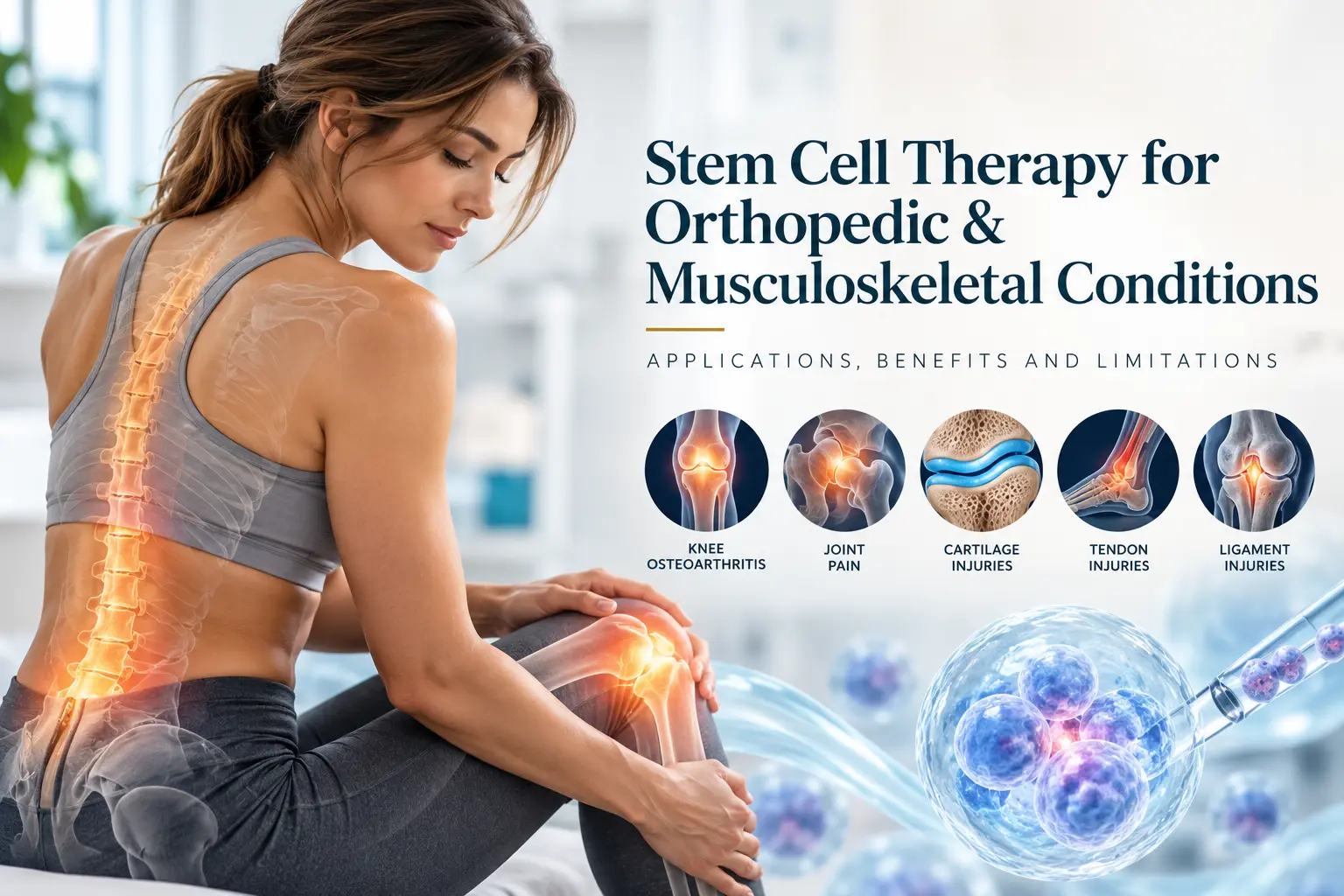
Can damaged joints, cartilage or tendons benefit from the body’s natural repair mechanisms?
This question has encouraged growing research into regenerative medicine, particularly for patients experiencing persistent joint pain, stiffness or sports-related injuries.
Understanding the potential of stem cell therapy for orthopedic conditions in managing joint pain, osteoarthritis, cartilage damage and musculoskeletal injuries.
Plastic surgeons contribute to regenerative medicine through established procedures such as adipose tissue harvesting, fat grafting and soft-tissue reconstruction. Their experience with tissue handling also informs ongoing research into adipose-derived cellular therapies.
Dr. Zamir Paez is an internationally experienced plastic, reconstructive and aesthetic surgeon practicing in Medellín, Colombia, and Dubai. His clinical philosophy emphasizes individualized assessment, medical innovation and patient safety.
This article examines the applications, limitations and clinical considerations surrounding orthopedic stem cell therapy, including its relationship with reconstructive surgery.
For more information about the available treatment approach, explore Dr. Zamir Paez’s page on stem cell therapy in Colombia
What is Stem Cell Therapy for Orthopedic Conditions?
Stem cell therapy involves using cells with regenerative and signaling properties to investigate possible therapeutic effects in damaged or diseased tissues.
Stem cell therapy for musculoskeletal conditions may involve adipose-derived cells, which have attracted interest in reconstructive surgery because fat can be harvested through established liposuction techniques.
Mesenchymal stromal cells (MSCs), commonly studied in orthopedic research, may be obtained from bone marrow or adipose tissue.
Stem cell therapy for musculoskeletal conditions is being investigated for its possible effects on inflammation, tissue signalling, and repair processes.
How Stem Cell Therapy may support musculoskeletal health
Research into regenerative medicine for joint pain is based on several biological mechanisms:
- Inflammatory regulation: MSCs may influence inflammatory responses within affected tissues.
- Cellular signalling: Secreted molecules may affect the activity of surrounding cells.
- Tissue repair research: Scientists are examining whether cell-based treatments can support cartilage and connective tissue repair.
- Joint function: Some clinical studies report improvements in pain and mobility, although findings remain inconsistent.
These effects do not prove that injected stem cells reliably regenerate damaged tissues.
What Orthopedic Conditions May be Considered for Stem Cell Therapy?
Condition | Area of investigation |
Osteoarthritis | Pain, inflammation and joint function |
Knee injuries | Symptoms and functional recovery |
Cartilage defects | Cartilage preservation and repair |
Tendon injuries | Tendon healing and tissue response |
Ligament injuries | Connective tissue recovery |
Sports injuries | Tissue healing and rehabilitation |
These applications are largely investigational and should not be interpreted as established treatment indications.
Stem Cell Therapy for Osteoarthritis
Osteoarthritis develops when joint tissues, including cartilage, undergo progressive structural changes. Patients commonly experience pain, stiffness and restricted movement.
Stem cell therapy for osteoarthritis has attracted research interest because MSCs may influence inflammatory signalling within affected joints.
Some studies report symptomatic improvement. However, evidence is insufficient to establish reliable cartilage regeneration or long-term disease modification.
Regenerative therapy for osteoarthritis therefore requires careful consideration alongside established treatments, including exercise therapy, weight management, medication and surgery when indicated.
Stem Cell Therapy for Knee Pain and Joint Injuries
The knee is among the most extensively studied joints in orthopedic regenerative medicine.
Clinical trials investigating stem cell therapy for knee osteoarthritis have assessed pain, stiffness, walking ability, and functional improvement.
Similarly, stem cell therapy for joint pain is being studied in selected degenerative and injury-related conditions.
Results depend on the diagnosis, degree of structural damage, cell preparation and treatment protocol. Stem cell injections cannot be assumed to reverse advanced joint deterioration.
Stem Cell Therapy for Cartilage, Tendon and Ligament Injuries
Stem cell therapy for orthopedic injuries includes:
- Stem cell therapy for cartilage injuries: Investigates cartilage preservation and repair.
- Stem cell therapy for tendon injuries: Examines healing in selected tendon disorders.
- Stem cell therapy for ligament injuries: Studies biological responses following ligament damage.
- Stem cell treatment for sports injuries: Explores potential applications in rehabilitation.
Research into stem cells for cartilage repair continues, although consistent restoration of normal cartilage remains unproven.
Did you know? A 2024 retrospective study involving 50 patients with osteoarthritis or bone defects reported improvements in pain and functional scores at six months. However, adverse events were also recorded, and the absence of a control group limits conclusions about effectiveness. |
The Role of Plastic Surgeons in Musculoskeletal Regenerative Medicine
Stem cell therapy in plastic surgery has developed alongside advances in fat grafting, tissue reconstruction and cellular research.
Plastic surgeons may contribute through:
- Adipose harvesting: Obtaining fat through liposuction for appropriate reconstructive or research applications.
- Cell preparation: Collaborating with specialized laboratories to process adipose-derived products.
- Soft-tissue reconstruction: Using fat grafting to address selected tissue defects and scars.
- Hand and microsurgery: Managing complex soft-tissue injuries involving tendons and nerves.
- Regenerative research: Investigating adipose-derived stem or stromal cells (ADSCs).
Plastic surgeons may contribute expertise in tissue harvesting and reconstruction. Orthopedic specialists assess underlying joint and bone disorders, while the appropriate medical team determines whether regenerative treatment is suitable.
Applications of Regenerative Medicine in Plastic Surgery
Regenerative medicine includes established reconstructive techniques, such as fat grafting, as well as emerging cell-based approaches under scientific investigation. The evidence and clinical applications vary by procedure and treatment method.
Relevant applications include:
- Use of own fat to restore soft tissue.
- Scar reconstruction and post-traumatic tissue reconstruction.
- Biological research with complex wounds.
- Research on cell-assisted fat grafting.
- Research on tendon and peripheral nerve repair.
Aesthetic surgery and aesthetic medicine that use stem cells are also being investigated, but there are particular procedures for each which must be clinically validated.
Who Can Benefit From Orthopedic Stem Cell Therapy?
The suitability for orthopedic cell-based research or treatment will be dependent upon:
- When a medical diagnosis of an orthopedic condition is confirmed and imaging has been performed
- How severe and how long the symptoms are
- Medical history or treatment and rehabilitation
- General health and medical conditions which are relevant
- Clinical evidence & regulatory approval
In patients with more severe destruction of the joint, marked instability or injuries that are surgically correctable, there may be an established orthopedic procedure.
What Happens During an Orthopedic Stem Cell Therapy Treatment?
Procedures differ according to the cellular product and approved clinical protocol.
A typical research or treatment pathway may involve:
- Clinical assessment: Reviewing symptoms, medical history and imaging
- Cell sourcing: Determining whether bone marrow, adipose-derived or another authorized cellular product is involved
- Cell preparation: Processing the material under appropriate quality and sterility controls
- Administration: Delivering the preparation according to the specified protocol
- Follow-up: Monitoring symptoms, function and adverse events
A stem cell treatment by a plastic surgeon may involve adipose tissue expertise, while orthopedic disease management requires appropriate orthopedic specialist involvement.
Recovery and Results After Stem Cell Therapy
Recovery depends on the procedure, treatment site, and individual health.
Temporary discomfort, swelling, or soreness may occur. More serious complications can include infection, contamination-related reactions, or immune responses, depending on the product.
Clinical studies often assess outcomes over several months. However, there is no established timeline for improvement, and some patients experience no meaningful benefit.
Stem Cell Therapy vs Traditional Orthopedic Treatments
Conventional orthopedic care | Investigational stem cell therapy |
Includes rehabilitation, medication, injections and surgery | Uses cellular products under specific protocols |
Established indications and clinical guidelines | Evidence varies considerably |
May address pain, function or structural damage | Investigates biological and symptomatic effects |
Outcomes depend on diagnosis and intervention | Long-term effectiveness remains uncertain |
Stem cell treatment should not delay necessary orthopedic care.
Why Individual Evaluation Matters Before Stem Cell Therapy
Joint pain may arise from cartilage degeneration, ligament instability, tendon disease, inflammation or several overlapping conditions.
An accurate diagnosis helps determine whether rehabilitation, medication, orthopedic surgery or participation in an appropriately regulated clinical trial is suitable.
Patients should also understand the cellular product, tissue source, processing method, regulatory status and qualifications of the treating professionals.
Regenerative Treatments in Aesthetic Surgery
Dr. Zamir Paez’s background in plastic and reconstructive surgery provides a relevant perspective on adipose tissue handling, fat grafting, and soft-tissue reconstruction.
The medical team at Dr. Zamir’s clinic focuses on:
- Individualized assessment: Considering medical history, anatomical findings and treatment goals
- Medical innovation: Maintaining an interest in evolving technologies and scientific developments
- Patient safety: Discussing procedural considerations and realistic expectations
- International experience: Providing care for patients from Colombia and other countries
Understanding Your Options For Musculoskeletal & Regenerative Care
Stem cell therapy continues to attract scientific interest for osteoarthritis, joint injuries and connective tissue disorders. Its clinical role, however, must be guided by reliable evidence, appropriate regulation and careful patient selection.
Schedule a consultation with the medical team at Dr. Zamir’s clinic in Medellín, Colombia, to discuss your medical concerns and receive guidance on appropriate specialist evaluation, established treatment options, and the current limitations of regenerative therapies.

FAQs- Frequently Asked Questions
Some studies report symptom improvement, but long-term effectiveness and cartilage regeneration remain unproven.
Pain reduction has been reported in certain studies, although results are inconsistent.
Yes, primarily in research settings. It is not an established standard treatment.
Cartilage repair is being investigated, but dependable regeneration has not been demonstrated.
Research is ongoing, with insufficient evidence to support routine clinical use.
Potential applications are being studied, but established ligament repair methods remain important.
Suitability depends on the injury. Stem cell interventions remain investigational for most sports injuries.
Studies assess outcomes over weeks or months, but no predictable improvement timeline exists.
Eligibility depends on diagnosis, general health, and whether a suitable authorized clinical protocol exists.
No. It cannot correct severe joint damage, major instability, or structural injuries that require surgery.
Dr. Zamir Paez
About the Author
Dr. Zamir Paez
Board-Certified Plastic, Reconstructive & Aesthetic Surgeon
- Internationally Certified Plastic Surgeon
- Specialist in Advanced Body Contouring & Facial Aesthetics
- Practicing in Colombia & Dubai
- Founder of BodyCraft Academy
Dr. Zamir Paez is an internationally recognized plastic, reconstructive, and aesthetic surgeon known for delivering natural-looking results through advanced surgical techniques and personalized patient care. With over a decade of experience, he specializes in body contouring, mommy makeover procedures, breast surgery, rhinoplasty, facial rejuvenation, and HD liposculpture for patients across the Middle East and internationally.
Internationally trained at renowned institutions including The Royal Melbourne Hospital in Australia, Dr. Zamir combines surgical precision, innovation, and artistic balance to create refined aesthetic outcomes tailored to each patient. He is also the co-founder of BodyCraft Academy, where he contributes to the global education and training of plastic surgeons.
Medical Disclaimer
This article is intended for informational and educational purposes only and should not be considered medical advice, diagnosis, or treatment. Always consult a qualified healthcare professional regarding any medical or aesthetic concerns before undergoing any procedure.
Medically reviewed by Dr. Zamir Paez, Board-Certified Plastic, Reconstructive & Aesthetic Surgeon.
