
How Long Does Rhinoplasty Take to Heal? Full Recovery Timeline (2026)
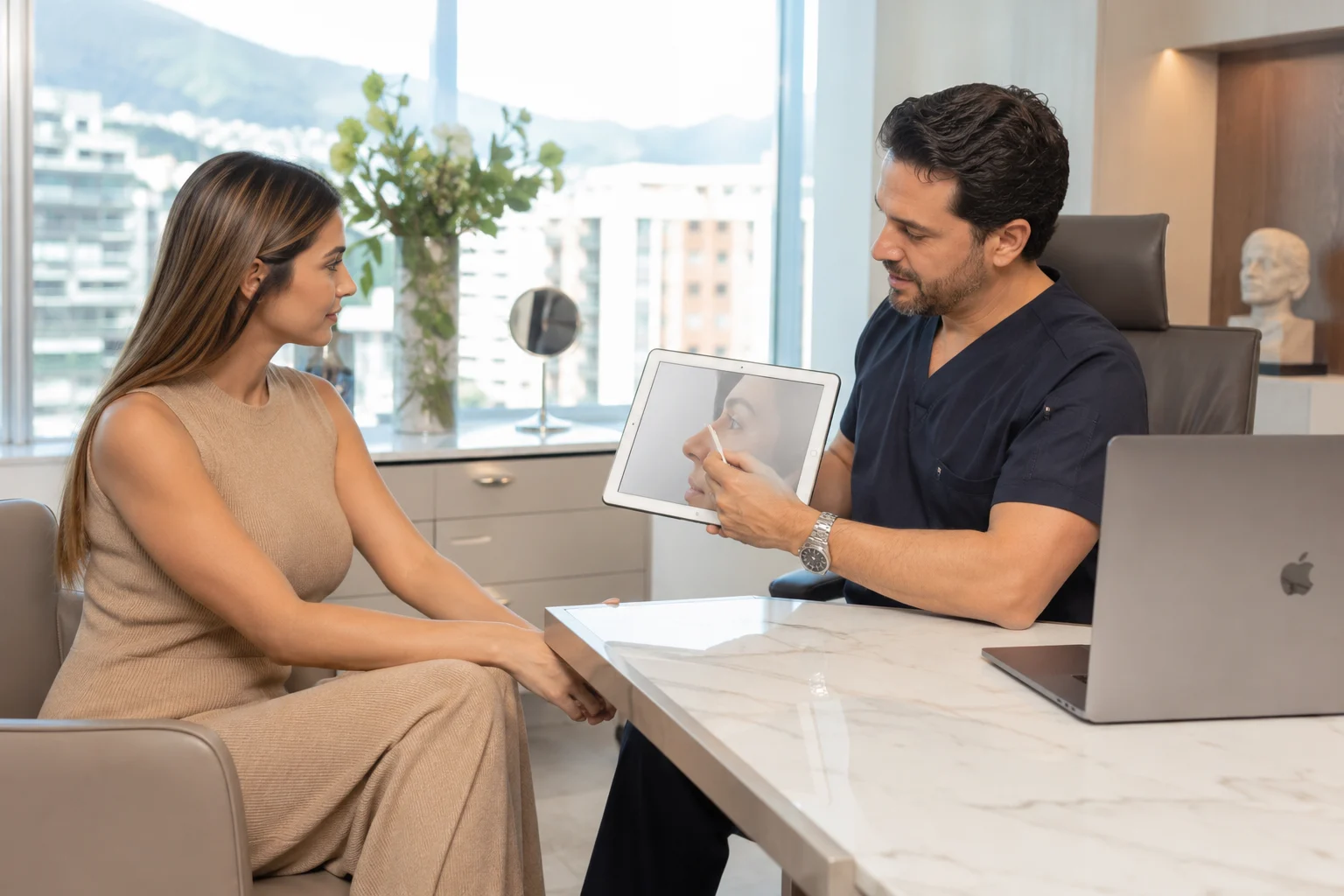
You’ve done your research, consulted your surgeon, and decided to go ahead with rhinoplasty, but the journey doesn’t end after the surgery. For many patients, the biggest questions are about rhinoplasty recovery time and when they will see the final results.
At the practice of Dr. Zamir Páez in Medellín, Colombia, we believe that a successful transformation is a combination of surgical precision and dedicated aftercare. Dr. Zamir combines advanced surgical techniques with attentive aftercare to help patients heal comfortably and confidently.
If you are considering rhinoplasty in Colombia in 2026, understanding the rhinoplasty recovery timeline, common nose job healing stages, and realistic expectations can make the process far less stressful.
The Nose Job Healing Stages at a Glance
Stage | Timeframe | What to Expect |
Immediate post-op | Days 1–3 | Splint, swelling, congestion, rest |
Early healing | Days 4–7 | Splint removal, peak bruising |
Social recovery | Weeks 2–3 | Returning to work, most bruising fades |
Intermediate healing | Weeks 4–8 | Swelling subsides, light activity resumes |
Late refinement | Months 3–6 | Shape becomes clearer |
Final results | 12–18 months | Full resolution of rhinoplasty swelling timeline |
Understanding Rhinoplasty Recovery Time
Every patient heals differently, but most people can expect the initial phase of rhinoplasty recovery time to last about 1–2 weeks. However, subtle internal healing continues for several months.
The reason healing takes time is simple: rhinoplasty reshapes delicate bone, cartilage, skin, and soft tissue. Even after external bruising disappears, the nose continues to adapt internally.
What are the factors that influence nose job healing stages?
The factors that influence nose job healing stages include:
- Rhinoplasty surgical technique used
- Thickness of your skin
- Extent of nasal reshaping
- Patient’s age and general health
- Commitment to the rhinoplasty aftercare procedure
Patients who follow post-operative instructions carefully often experience a smoother recovery and more refined final results.
Rhinoplasty Recovery Timeline: Week-by-Week Healing
1st week – The hardest time, but also the shortest
The first few days are usually the most uncomfortable stage of the rhinoplasty recovery timeline. Patients commonly experience:
- Swelling around the nose and eyes
- Mild bruising
- Nasal congestion
- Pressure or tightness
- Fatigue
This is also when the rhinoplasty swelling timeline is most noticeable. While pain is usually manageable with medication, congestion can feel frustrating because the nose may feel blocked.
What to do during the 1st week?
- Apply cold compresses around the eyes, not directly on the nose
- Keep your head elevated
- Sleep on your back
- Stay away from hot food and beverages
- Skip heavy activities
- Take medicines and attend follow-ups.
Quick Tip: Plan for nothing during your first week. Your only job is to rest and heal.
2nd week – The splint comes off – get ready for the big reveal
By the end of the first week, most bruising begins to fade significantly. The nasal splint is often removed around day 7.
What will your nose look like at this stage?
You will see the new shape of your nose for the first time! However, remember that “surgical swelling” is at its peak here. Your nose may look slightly upturned or wider than expected. Don’t panic; this is temporary.
Rhinoplasty aftercare tip: Avoid blowing your nose. Use saline sprays as recommended by your surgeon to keep the nasal passages moist.
Week 3 to 4 – Back to the world, but carefully
By the third and fourth week, most patients are back at work, particularly those with desk jobs or remote roles. The rhinoplasty swelling timeline is showing real progress here.
How long does nose surgery take to heal before I can breathe clearly? Usually, by week 3, internal inflammation decreases enough for significantly improved airflow.
Avoid heavy lifting and contact sports during this stage to protect healing nasal structures.
6 months to 1 year: The Final Reveal
Most patients ask: How long does rhinoplasty take to heal completely? The honest answer is 12 to 18 months.
During the final months, the skin “shrink-wraps” around the new framework, and the subtle definitions of the bridge and tip become permanent.
How long does Nose Surgery take to Heal Internally?
One of the most misunderstood aspects of recovery is internal healing. Patients frequently ask, how long does nose surgery take to heal if the bruising disappears within two weeks.
Visible recovery and complete internal healing are not the same. Here’s what you can expect in the internal healing phase.
- 2 weeks: Major bruising improves
- 4–6 weeks: Most swelling decreases
- 3–6 months: Nasal definition sharpens
- 12–18 months: Final refined results become visible
Patients with thicker skin may experience a longer rhinoplasty recovery time because swelling takes more time to resolve.
Did you know that the skin on the tip of the nose is thicker than the skin on the bridge? This is why the tip takes significantly longer to reach its final, refined shape than the rest of the nose. |
Rhinoplasty Swelling Timeline: What’s Normal?
Swelling is the longest-lasting part of recovery. Understanding the rhinoplasty swelling timeline helps patients avoid unnecessary worry.
- First month: About 60–70% of swelling typically subsides during the first month. The bridge often heals faster than the nasal tip.
- Three months: By this point, the nose looks significantly more refined. Photos start to reflect a visible improvement.
- Six months: Most patients feel comfortable with their appearance at this stage of the rhinoplasty recovery timeline.
- One year and beyond: Tiny residual swelling, especially in the tip, gradually disappears. This is when final contour details emerge.
At Dr. Zamir Páez’s clinic, patients are monitored throughout healing to ensure recovery progresses properly and naturally.
When can I exercise After Rhinoplasty?
This is one of the most common questions: “When can I exercise after rhinoplasty?” The answer is: you can start light exercise around weeks 4 to 6, with caution.
Here’s a general guide to returning to physical activity as part of your rhinoplasty aftercare:
- Weeks 1–3: Complete rest. Walking around the house is fine; nothing that raises your heart rate significantly
- Weeks 3–4: Light walking outdoors
- Weeks 4–6: Low-impact cardio (gentle cycling, slow-paced walking) may be permitted; always check with your surgeon
- Week 6–8: Light weight training with no head-down positions
- 3 months+: Most vigorous activities, including running, swimming, and contact sports, can typically resume
Essential Rhinoplasty Aftercare Tips
Proper rhinoplasty aftercare plays a major role in healing quality and long-term results.
Do: | Avoid: |
|
|
Why do Patients Travel to Medellín for Rhinoplasty?
Medellín has become a global destination for cosmetic surgery thanks to its combination of advanced medical expertise, modern surgical facilities, and personalized patient care. Many international patients also compare rhinoplasty cost in Colombia vs USA before making a decision.
Patients seeking rhinoplasty often choose Dr. Zamir Páez for:
- Personalized surgical approach,
- Focus on balanced facial features,
- Advanced rhinoplasty methods,
- Dedicated support for international patients,
- Clear recovery guidance.
The goal is never an artificial or overdone appearance; it is a refined enhancement that still looks authentically like you.
Understanding safety standards and accredited clinics is also essential before traveling for surgery.
World-Class Rhinoplasty Results with expert Plastic Surgeon Dr. Zamir Paez in Medellin
Dr. Zamir Páez – Plastic Surgeon in Medellin, Colombia – is renowned for his meticulous approach, ensuring that your results are not only beautiful but also functional. By choosing our clinic in Medellín, you are opting for a blend of high-end medical expertise and the supportive care needed for a smooth rhinoplasty recovery timeline.
Ready to redefine your profile with Colombia’s leading rhinoplasty expert?

Dr. Zamir Páez
About the Author
Dr. Zamir Páez
Board-Certified Plastic, Reconstructive & Aesthetic Surgeon
- Internationally Certified Plastic Surgeon
- Specialist in Advanced Body Contouring & Facial Aesthetics
- Practicing in Colombia & Dubai
- Co-Founder of BodyCraft Academy
Dr. Zamir Páez is an internationally recognized plastic, reconstructive, and aesthetic surgeon known for delivering natural-looking results through advanced surgical techniques and personalized patient care. With over a decade of experience, he specializes in body contouring, mommy makeover procedures, breast surgery, rhinoplasty, facial rejuvenation, and HD liposculpture for patients across the Middle East and internationally.
Internationally trained at renowned institutions including The Royal Melbourne Hospital in Australia, Dr. Zamir combines surgical precision, innovation, and artistic balance to create refined aesthetic outcomes tailored to each patient. He is also the co-founder of BodyCraft Academy, where he contributes to the global education and training of plastic surgeons.
Medical Disclaimer
This article is intended for informational and educational purposes only and should not be considered medical advice, diagnosis, or treatment. Always consult a qualified healthcare professional regarding any medical or aesthetic concerns before undergoing any procedure.
Medically reviewed by Dr. Zamir Páez, Board-Certified Plastic, Reconstructive & Aesthetic Surgeon.
FAQs- Frequently Asked Questions
While you will look “normal” within 2 weeks, complete healing, including the full resolution of minor tip swelling and internal tissue maturation, takes between 12 and 18 months.
Most patients experience significant improvement in breathing by 2 to 3 weeks post-surgery as internal swelling decreases and nasal packing is removed.
Most swelling improves within the first three months, though subtle swelling can continue resolving for up to a year.
Light walking is encouraged immediately. However, you should wait at least 3–4 weeks for moderate cardio and 6 weeks for heavy lifting or high-impact sports. Always consult your surgeon before resuming a gym routine.
Most patients describe recovery as more uncomfortable than painful, mainly due to congestion and swelling.
Many patients can travel within 1–2 weeks, but long-distance flights should always be approved by the surgeon first.
Medical Disclaimer
This article is intended for informational and educational purposes only and should not be considered medical advice, diagnosis, or treatment. Always consult a qualified healthcare professional regarding any medical or aesthetic concerns before undergoing any procedure.
Medically reviewed by Dr. Zamir Páez Eid Mojica, Board-Certified Plastic, Reconstructive & Aesthetic Surgeon.
