
Can Fat Return After Liposuction? What Patients Need to Know About Long-Term Results
Key Takeaways
|
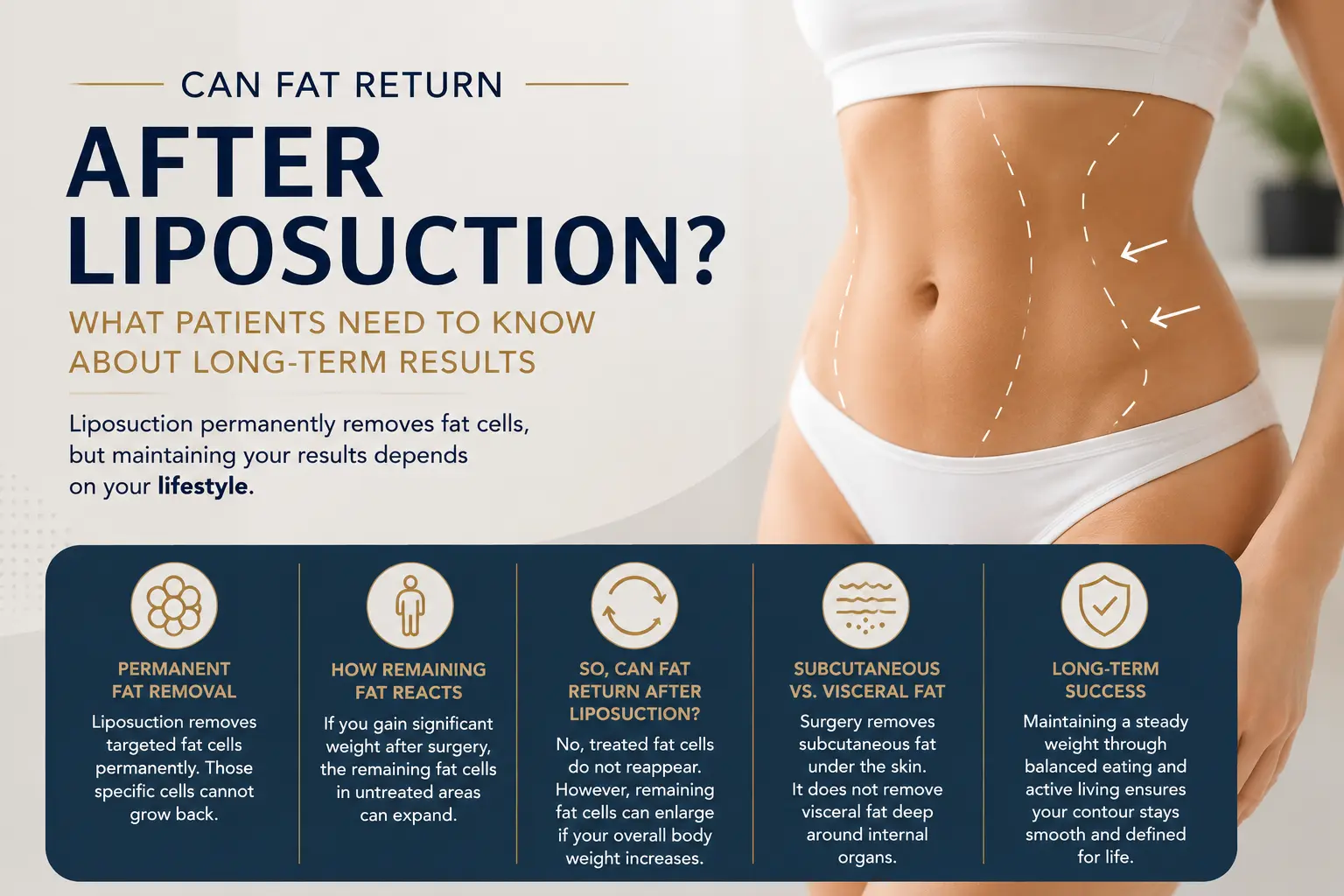
Can fat return after liposuction? It’s one of the most common questions patients ask before body contouring surgery. The short answer is no; the fat cells removed during liposuction are permanently gone.
However, that doesn’t mean you’re protected from future weight gain. The remaining fat cells throughout your body can still enlarge if you gain weight, which may change your overall shape over time.
According to Dr. Zamir Paez, a board-certified plastic surgeon practicing in Medellín, Colombia, liposuction is designed to sculpt and refine body contours rather than serve as a weight-loss treatment.
Understanding how fat cells behave after liposuction, and what you can do to maintain your results, can help you enjoy your new contours for many years while setting realistic expectations about long-term outcomes.
What Happens to Fat Cells After Liposuction?
Liposuction works by permanently removing fat cells from specific areas of the body. During the procedure, a thin tube called a cannula is inserted through small incisions to gently loosen and suction out unwanted fat. Once these fat cells are removed, your body does not typically replace them under normal circumstances.
However, liposuction does not remove every fat cell from the treated area. The remaining fat cells can still store fat and increase in size if you gain weight after surgery. This is why maintaining a stable weight plays such an important role in preserving your results.
It’s also important to understand that liposuction changes the number of fat cells in a treated area, not how your body naturally stores fat. If your weight remains relatively stable, your new body contours are more likely to last for many years.
Subcutaneous Fat vs. Visceral Fat
Not all fat in your body is the same, and this matters for what liposuction can actually treat.
- Subcutaneous fat sits just beneath the skin. It’s the soft, pinchable layer that liposuction is designed to target.
- Visceral fat surrounds your internal organs deep in the abdominal cavity. It isn’t accessible through liposuction at all.
Because liposuction only targets subcutaneous fat, it improves body contours rather than reducing visceral fat. Managing visceral fat still depends on healthy lifestyle habits, including regular exercise, a balanced diet, and maintaining a healthy weight.
Can Fat Return After Liposuction? Understanding Long-Term Results
Liposuction permanently removes fat cells from the areas being treated, so those specific cells do not come back. However, the procedure does not stop your body from storing fat in the future. If you gain weight after surgery, the remaining fat cells may enlarge, which may affect your overall body shape.
By reducing the number of fat cells in targeted areas, liposuction creates a slimmer, more balanced contour. These changes can be long-lasting, but your results will still be influenced by factors such as weight changes, pregnancy, hormonal shifts, and the natural aging process.
The best way to protect your results is to maintain a stable weight through healthy eating, regular exercise, and an active lifestyle.
Does Fat Come Back After Liposuction if you Gain Weight?
In cases of substantial weight gain, research on fat cell biology suggests that, in some situations, the body can generate new fat cells in areas beyond where cells were removed. This is one reason significant weight fluctuations after surgery can change the overall body shape, even if the originally treated area holds up relatively well.
Weight gain after liposuction doesn’t disappear, it just tends to show up differently:
- Treated areas have fewer fat cells, so they often accumulate less fat than before surgery.
- Untreated areas still contain their original number of fat cells and may become fuller with weight gain.
- Overall proportions can shift as a result, since some areas may stay relatively flat while others expand.
It’s not a guarantee, and everyone’s body responds differently, but it’s a realistic possibility worth understanding going in.
Liposuction Long-Term Results: What to Realistically Expect?
Liposuction long-term results are generally stable when your weight stays relatively consistent.
Most surgeons agree that swelling takes weeks to resolve, and final results typically become visible over three to six months, sometimes longer, depending on the treated area and technique.
Over time, the treated areas usually keep their slimmer contour because the removed fat cells don’t return. That said, your body will continue to change with age. Hormonal changes, pregnancy, shifts in metabolism, and a gradual loss of skin elasticity can all influence how you look, even if your weight stays the same. Liposuction improves body shape, but it doesn’t stop the normal changes that come with time.
Lifestyle Factors That Affect Permanent Fat Removal
Several key factors determine how your liposuction results over time hold up across different stages of life:
- Diet: Consistent eating habits help prevent the kind of weight swings that can alter your shape.
- Aging: As you get older, your skin gradually loses firmness and elasticity, which can influence how treated areas look over time.
- Hormones: Pregnancy, menopause, and certain medical conditions can influence how your body stores fat.
- Exercise: Regular physical activity supports a stable weight and helps maintain muscle tone around treated areas.
None of these factors are within your total control, but understanding them helps set realistic expectations for permanent fat removal.
Tips to Maintain Liposuction Results Over Time
Maintaining liposuction results starts with caring for your overall health:
- Aim for a stable weight rather than frequent gains and losses.
- Stay active with regular exercise, including both cardio and strength training.
- Prioritize protein and whole foods to support muscle and skin health.
- Stay hydrated, since it can support skin elasticity.
- Keep up with follow-up visits so any changes are caught early.
- Be patient with swelling in the first few months, since final results take time to appear.
Why Does Choosing an Experienced Plastic Surgeon like Dr. Zamir Paez Matter?
Liposuction is more than removing fat. It requires careful planning, a detailed understanding of anatomy, and realistic patient counseling.
As a plastic surgeon in Colombia, Dr. Zamir Paez develops personalized treatment plans based on each patient’s body shape, goals, skin quality, and overall health. During consultation, he discusses what liposuction can realistically achieve, how recovery progresses, and what you can do to maintain your results over time.
Patient education is an important part of long-term success. Understanding how fat cells respond after surgery helps you make informed decisions before undergoing treatment.
For individuals considering liposuction Colombia, choosing a qualified plastic surgeon with experience in body contouring procedures can help ensure that treatment recommendations are tailored to your anatomy and expectations rather than following a one-size-fits-all approach.

FAQs- Frequently Asked Questions
Yes, but not in the way many people think. The fat cells removed during liposuction are permanently gone. If your weight increases, the fat cells that weren’t removed can hold more fat, changing your overall shape. Staying close to your usual weight can help your results last longer.
Usually not. Adults don’t normally replace the fat cells removed during liposuction. Instead, weight gain happens when the fat cells that remain become larger. In cases of significant weight gain, some new fat cells may develop.
Yes. Liposuction permanently removes fat cells from the area of treatment. Your results are long-lasting, but weight gain can still change your body over time.
Liposuction doesn’t cause weight gain, but it also doesn’t prevent it. Your weight after surgery depends on the same factors as before: diet, activity level, metabolism, and lifestyle habits.
No. Liposuction reduces fat cells in treated areas, but doesn’t stop the remaining fat cells from storing fat if you gain weight.
New fat tends to accumulate in areas that weren’t treated, since those areas still have their full number of fat cells. This can sometimes change your body’s proportions compared to before surgery.
A healthy lifestyle goes a long way. Eating well, staying active, keeping your weight steady, and attending follow-up appointments can help you enjoy your results for years to come.
You’ll likely notice a difference once the initial swelling starts to settle. Most people see their final outcome within three to six months, although healing times vary from person to person.
Dr. Zamir Páez
About the Author
Dr. Zamir Páez
Board-Certified Plastic, Reconstructive & Aesthetic Surgeon
- Internationally Certified Plastic Surgeon
- Specialist in Advanced Body Contouring & Facial Aesthetics
- Practicing in Colombia & Dubai
- Co-Founder of BodyCraft Academy
Dr. Zamir Páez is an internationally recognized plastic, reconstructive, and aesthetic surgeon known for delivering natural-looking results through advanced surgical techniques and personalized patient care. With over a decade of experience, he specializes in body contouring, mommy makeover procedures, breast surgery, rhinoplasty, facial rejuvenation, and HD liposculpture for patients across the Middle East and internationally.
Internationally trained at renowned institutions including The Royal Melbourne Hospital in Australia, Dr. Zamir combines surgical precision, innovation, and artistic balance to create refined aesthetic outcomes tailored to each patient. He is also the co-founder of BodyCraft Academy, where he contributes to the global education and training of plastic surgeons.
Medical Disclaimer
This article is intended for informational and educational purposes only and should not be considered medical advice, diagnosis, or treatment. Always consult a qualified healthcare professional regarding any medical or aesthetic concerns before undergoing any procedure.
Medically reviewed by Dr. Zamir Páez, Board-Certified Plastic, Reconstructive & Aesthetic Surgeon.
