
Gynecomastia Before and After: What Results Can You Expect?
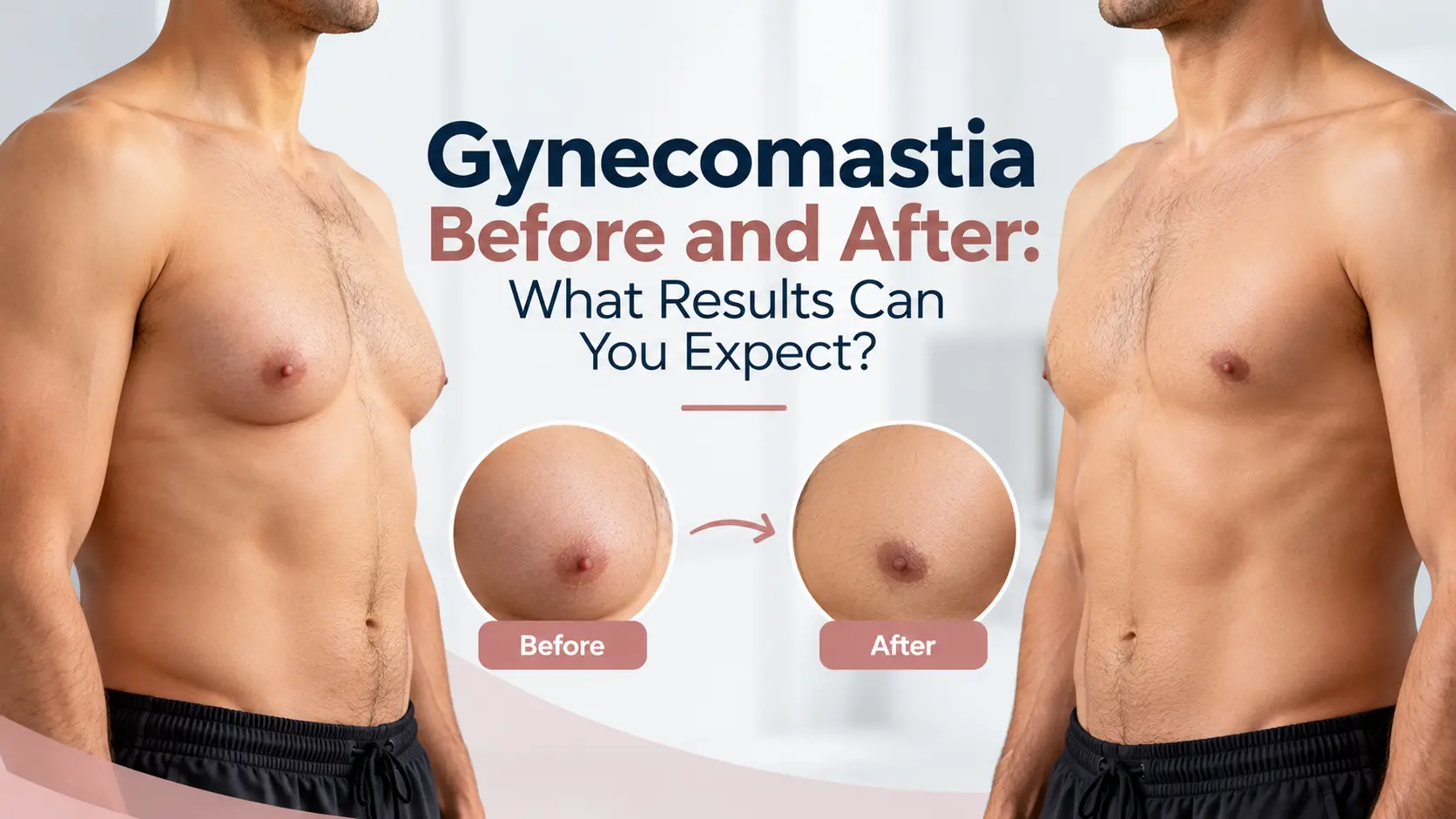
Gynecomastia is swollen breast tissue in men. It can affect one or both sides, sometimes unevenly, and it may go away on its own. If it stays, medication or surgery may help.
Before deciding on surgery, learn more about gynecomastia surgery in Colombia and the techniques used to address excess glandular tissue and chest fat.
A male breast reduction before-and-after comparison usually shows a flatter, smoother chest. Still, no two chests heal the same way. This guide explains how gynecomastia before and after typically looks like, so you can set realistic goals before you meet Dr. Zamir Paez.
Key takeaways: Gynecomastia Before and After at a Glance
|
What Changes Can You Expect After Gynecomastia Surgery?
Surgery targets what causes the fullness. Liposuction removes breast fat but not gland tissue. Gland excision removes the gland itself, often through small incisions. A plastic surgeon like Dr. Zamir Paez may use one or both, depending on your chest.
Gynecomastia treatment results may include:
- A flatter chest contour.
- Improved balance between both sides.
- Changes in nipple prominence.
- Better chest definition beneath clothing.
These gynecomastia treatment results vary. Surgery does not guarantee perfect symmetry or a completely flat chest.
What Does The Chest Look Like During Early Recovery?
The chest appearance after gynecomastia surgery changes as swelling and bruising settle. Early photographs may not reflect your eventual contour. Redness, swelling, and bruising are normal. Avoid straining, bending, and lifting.
- Days 1–7: Your chest looks swollen and bruised. Your first follow-up is usually five to seven days after surgery.
- Weeks 1–2: Most people return to work within seven to ten days, depending on the job.
- Around week 6: Swelling has gone down considerably. Avoid direct sun for about six weeks.
Follow aftercare instructions for proper wound care, activity, and compression. During gynecomastia healing stages, seek medical advice if you experience worsening pain, rapidly increasing swelling, or fever. Chest pain or shortness of breath requires urgent medical attention.
When Will You See The Final Results Of Gynecomastia Surgery?
Gynecomastia final results take patience, and timelines vary from person to person. This table covers gynecomastia surgery recovery and results.
Time after surgery | What you may notice |
Week 1 | Swelling and bruising |
Week 6 | Swelling much lower |
3+ months | Swelling settles and the shape becomes clearer |
Up to 6 months | Final results generally visible |
Dr. Zamir Paez can explain what to expect for your case at your follow-up visits.
How Can Gynecomastia Surgery Change The Chest Contour?
Your chest appearance after gynecomastia surgery depends on how much tissue you have.
- Mild to moderate: A small incision under the nipple may be enough.
- Moderate to severe: Incisions around the nipple and along the lower edge of the breast may be needed.
- Some cases: Nipple-areola repositioning may be required, and it carries added risks.
That’s why a personal consultation matters before you choose a technique.
Can Gynecomastia Results Look Natural?
Natural-looking results are a goal, not a promise. Dr. Zamir Paez’s practice focuses on natural-looking results and personalized care. Your outcome still depends on your anatomy, and risks remain:
- Asymmetry between the two sides
- Nipple dimpling, denting, or inversion
- Changes in nipple sensation, most often temporary
- Repeat surgery in some cases
What Factors Affect Gynecomastia Surgery Results?
Several factors influence your outcome:
- Tissue type: Gynecomastia can be glandular, fatty, or mixed. Chest fat in people with obesity can look similar, but it isn’t the same condition.
- Cause: Hormonal changes, drugs, and some health conditions can cause gynecomastia. If the cause isn’t resolved, it can come back.
- Weight: Significant weight gain can cause new enlargement.
- Aftercare: Follow your surgeon’s instructions, including sun and activity limits.
Read more about the causes of gynecomastia and available treatment options
What Should You Look For in Gynecomastia Before & After Photos?
Gynecomastia before-and-after results are easier to assess when you compare photos taken under similar conditions. When reviewing gynecomastia surgery before-and-after photos, look for patients with similar chest anatomy, consistent lighting and angles, and a clearly stated recovery timeline.
- Patients with a chest type and severity similar to yours
- The same angles and lighting before and after
- The time since surgery, because a six-week photo differs from a six-month one
- Visible scars and nipple position, not only chest flatness
- Photos shared with the patient’s permission
Ask Dr. Zamir Paez’s team how long after surgery each photo was taken.
Can Gynecomastia Results Change Over Time?
Recurrence is uncommon but can happen with weight gain or if a medication that caused gynecomastia continues. Removed tissue does not typically grow back in the same way, but remaining tissue may enlarge if hormonal changes, certain medications, or significant weight gain affect the chest.
Weight gain can increase chest fat and change the surgical contour. Weight loss may reduce excess fat, but it does not necessarily resolve enlarged glandular tissue. Keeping a steady weight and reviewing your medications with your doctor supports long-term gynecomastia results.
Why Choose Dr. Zamir Paez for Gynecomastia Surgery results?
Realistic gynecomastia before-and-after expectations start with an honest consultation. Dr. Zamir Paez offers:
- Certified plastic surgeon practicing in Medellín, Colombia, and Dubai
- Experience at The Royal Melbourne Hospital in Australia and Cosmesurge in Dubai
- Care for national and international patients, including from the US and Canada
- Personalized planning, with natural-looking results as the aim
Every surgery carries risks, including bleeding, infection, asymmetry, and sensitivity changes.
Book a consultation with Dr. Zamir Paez to discuss your chest and what gynecomastia surgery results may look like for you.

FAQs- Frequently Asked Questions
You may notice a change in chest shape within the first few weeks, but swelling can take several months to settle before the final contour becomes clear.
Swelling may take three months or more to decrease. It’s down considerably by week six.
No surgeon can promise that. The goal is a flatter, more balanced chest, and your tissue type and anatomy affect the outcome.
They can. Dimpling, inversion, or sensation changes are possible. The areola may also shrink.
Yes, surgery can make the chest look more balanced, although some unevenness may remain. In certain cases, a second procedure may be considered if the result needs further correction.
Swelling and bruising are temporary. Call your surgeon if swelling or tension keeps increasing on one side.
Most patients need three to six months
It’s uncommon, but it can happen with weight gain or continued use of certain medications.
Yes. Significant weight gain can increase chest fat and change the shape of your chest after surgery.
Swelling and bruising should gradually improve as you heal. Contact your surgeon if you develop a high fever, severe pain, or sudden changes in chest symmetry.
Dr. Zamir Paez
About the Author
Dr. Zamir Paez
Board-Certified Plastic, Reconstructive & Aesthetic Surgeon
- Internationally Certified Plastic Surgeon
- Specialist in Advanced Body Contouring & Facial Aesthetics
- Practicing in Colombia & Dubai
- Founder of BodyCraft Academy
Dr. Zamir Paez is an internationally recognized plastic, reconstructive, and aesthetic surgeon known for delivering natural-looking results through advanced surgical techniques and personalized patient care. With over a decade of experience, he specializes in body contouring, mommy makeover procedures, breast surgery, rhinoplasty, facial rejuvenation, and HD liposculpture for patients across the Middle East and internationally.
Internationally trained at renowned institutions including The Royal Melbourne Hospital in Australia, Dr. Zamir combines surgical precision, innovation, and artistic balance to create refined aesthetic outcomes tailored to each patient. He is also the co-founder of BodyCraft Academy, where he contributes to the global education and training of plastic surgeons.
Medical Disclaimer
This article is intended for informational and educational purposes only and should not be considered medical advice, diagnosis, or treatment. Always consult a qualified healthcare professional regarding any medical or aesthetic concerns before undergoing any procedure.
Medically reviewed by Dr. Zamir Paez, Board-Certified Plastic, Reconstructive & Aesthetic Surgeon.
