
How Diastasis Recti Is Repaired During Tummy Tuck Surgery
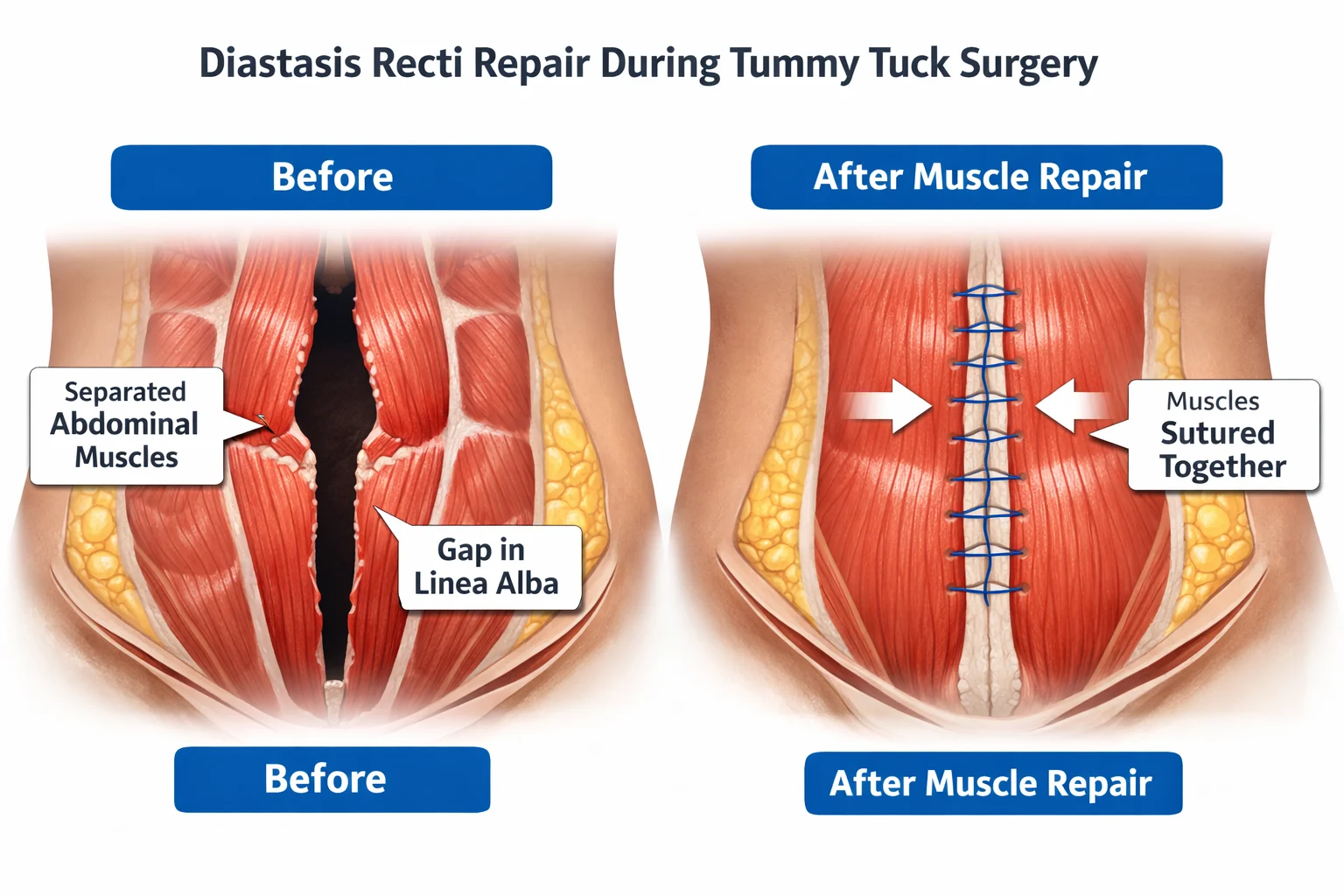
Many people who want a flatter, firmer abdomen deal with a condition called diastasis recti. This often happens after pregnancy or major weight changes and usually cannot be fixed with exercise alone. In these situations, diastasis recti repair during a tummy tuck can improve both appearance and function. Dr. Zamir Paez in Colombia combines advanced abdominoplasty techniques with meticulous care to restore abdominal strength and enhance body contours safely.
What is Diastasis Recti?
Diastasis recti means the rectus abdominis muscles, which run down the front of your abdomen, have separated. This happens when the connective tissue between them, called the linea alba, stretches and weakens, letting the muscles move apart. People with this condition may notice their belly bulges, feel soft, or that their core strength is lower, even if they are at a healthy weight.
Symptoms of Diastasis Recti
Diastasis recti usually starts in the third trimester of pregnancy. Many women first notice it weeks after giving birth, when their abdominal wall does not go back to its pre-pregnancy shape.
Many patients considering diastasis recti repair also explore options like a mommy makeover in Colombia, which combines abdominal repair with other post-pregnancy contouring procedures.
Some common signs that your abdominal muscles are separated include:
- A visible bulge above or below your belly button, even after you lose weight
- A soft or jelly-like feeling around the navel
- Coning or doming of the abdomen when contracting the core or leaning back
- Difficulty lifting objects or performing everyday tasks
- Low back pain
- Poor posture
When moderate to severe, these symptoms may not improve with exercise alone and may require diastasis recti repair during tummy tuck surgery for full correction.
What does Diastasis Recti feel like?
Diastasis recti itself is usually not painful. However, the weakness caused by separated abdominal muscles can lead to discomfort or strain.
Many people notice:
- Core weakness during routine activities
- A jelly-like gap between the abdominal muscles when tightening the core
- Reduced abdominal support and stability
In cases where conservative treatment fails, diastasis recti and abdominoplasty are often combined to restore both function and contour. During surgery, Dr. Zamir Paez performs abdominal muscle plication as part of tummy tuck muscle repair, bringing the muscles back together through core muscle tightening surgery to strengthen the abdominal wall.
Factors that increase the risk of Diastasis Recti
Several factors increase the likelihood of developing muscle separation:
- Less than 12 months between pregnancies
- Age over 35
- Multiple pregnancies (twins or triplets)
- Carrying a large baby
- Smaller body frame
- Significant strain during vaginal delivery
When symptoms persist and core weakness affects daily life, surgical correction through diastasis recti repair during a tummy tuck may provide long-term functional and aesthetic improvement.
Effects of Diastasis Recti following pregnancy
As pregnancy progresses, the uterus puts steady pressure on the abdominal wall, which makes the linea alba thin and stretch. Usually, this tissue tightens again after childbirth. But if it loses its elasticity, it may not return to its original state, leaving the separated abdominal muscles permanently apart.
The severity of diastasis recti can range from mild to severe and may worsen with multiple pregnancies, short intervals between pregnancies, or carrying a large baby. In many cases, diastasis recti and abdominoplasty are closely linked because surgical repair is the most reliable way to correct moderate to severe muscle separation.
How Diastasis Recti is repaired during tummy tuck surgery
During surgery, the surgeon lifts the skin and fat to reach the abdominal muscles, exposing them and performs abdominal muscle plication without cutting the muscles.
Plication involves:
- Placing strong sutures along the linea alba
- Bringing the separated muscles back together
- Reinforcing the abdominal wall
This restores the natural shape of the abdominal wall, creating a firmer, flatter base before removing excess skin and reshaping the abdomen. This type of core muscle tightening surgery not only improves the shape of your abdomen but also gives better support to your core.
Why a tummy tuck is effective
A tummy tuck does more than remove excess skin and fat. When diastasis recti is present, muscle repair is essential.
Abdominoplasty, also known as a tummy tuck in colombia, allows direct access to the abdominal wall, enabling the surgeon to repair muscle separation and reshape the abdomen.
Benefits of diastasis recti repair during tummy tuck
Diastasis recti repair during tummy tuck improves:
- Core stability
- Posture
- Lower back discomfort
- Ability to engage abdominal muscles
- Abdominal contour and tone
With stable weight and a healthy lifestyle, results are typically long-lasting.
Is diastasis recti repair always necessary during a tummy tuck?
Not always. Some people who want a tummy tuck do not have much muscle separation. During your consultation, Dr. Zamir Paez will check your abdominal muscles, skin, and any concerns you have to see if repair is needed. If diastasis recti is present, fixing it during a tummy tuck leads to better and longer-lasting results.
The Road To Recovery
Most people heal for about two to three weeks at first, with some limits on activity to protect the repaired muscles. You can usually start light activities within a month, but full recovery and regaining strength can take a few months. It’s important to follow your post-surgery instructions for the best results.
Why choose Dr. Zamir Paez
If you’re experiencing abdominal bulging or weakened core muscles after pregnancy or weight loss, diastasis recti repair during tummy tuck surgery may help restore both function and contour. With expertise in diastasis recti and abdominoplasty, Dr. Zamir Paez offers personalized treatment plans focused on safety, natural results, and long-term core support.
Book a consultation with Dr. Zamir Paez in Colombia to find out if tummy tuck muscle repair is right for you and get a plan that fits your needs.

FAQs- Frequently Asked Questions
The surgeon uses sutures to bring the separated abdominal muscles back together through abdominal muscle plication.
It is both. The repair improves abdominal contour and enhances core stability and support.
Yes, repairing the muscle separation addresses the underlying cause of abdominal bulging.
Some discomfort is expected initially, but pain is well-managed with medication and gradually improves.
Initial recovery takes about 2–3 weeks, while full healing and return to unrestricted activity typically occurs around 6–8 weeks.
Recurrence is uncommon when repair is done correctly, but future pregnancies or significant weight gain can affect results.
Mild cases may improve with targeted core rehabilitation exercises, but moderate or severe separation usually does not fully close with exercise alone. When the connective tissue is significantly stretched, surgical repair during a tummy tuck is often the most reliable way to restore abdominal support.
When performed by a qualified plastic surgeon, diastasis recti repair is considered a safe and well-established procedure. As with any surgery, there are potential risks, but careful evaluation, proper surgical technique, and following post-operative instructions help minimize complications.
Yes. In many cases, liposuction is combined with tummy tuck surgery to improve contour while the muscles are repaired. The combination addresses both excess fat and muscle separation, creating a smoother and more balanced abdominal shape.
The cost varies depending on the extent of repair, surgical technique, and individual treatment plan. Because diastasis recti repair is performed as part of a tummy tuck procedure, a personalized consultation is necessary to provide an accurate estimate.
Dr. Zamir Páez
About the Author
Dr. Zamir Páez
Board-Certified Plastic, Reconstructive & Aesthetic Surgeon
- Internationally Certified Plastic Surgeon
- Specialist in Advanced Body Contouring & Facial Aesthetics
- Practicing in Colombia & Dubai
- Co-Founder of BodyCraft Academy
Dr. Zamir Páez is an internationally recognized plastic, reconstructive, and aesthetic surgeon known for delivering natural-looking results through advanced surgical techniques and personalized patient care. With over a decade of experience, he specializes in body contouring, mommy makeover procedures, breast surgery, rhinoplasty, facial rejuvenation, and HD liposculpture for patients across the Middle East and internationally.
Internationally trained at renowned institutions including The Royal Melbourne Hospital in Australia, Dr. Zamir combines surgical precision, innovation, and artistic balance to create refined aesthetic outcomes tailored to each patient. He is also the co-founder of BodyCraft Academy, where he contributes to the global education and training of plastic surgeons.
Medical Disclaimer
This article is intended for informational and educational purposes only and should not be considered medical advice, diagnosis, or treatment. Always consult a qualified healthcare professional regarding any medical or aesthetic concerns before undergoing any procedure.
Medically reviewed by Dr. Zamir Páez, Board-Certified Plastic, Reconstructive & Aesthetic Surgeon.
